home


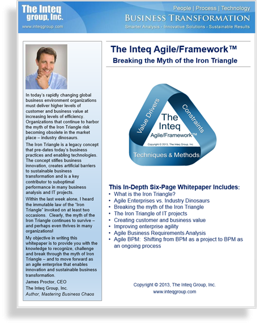
[CLICK TO DOWNLOAD]
COMPLETE COURSE INFORMATION


10 Reasons to attend Inteq Training Programs
[read more]


FREQUENTLY ASKED QUESTIONS

Q: How do I schedule an on-site training program?
A: All Inteq training programs are available on-site at your location. On-site training enables us to tailor the delivery of the program to the unique need and requirements of your organization. Contact us for details.

Q: How are the programs priced?
A: On-site training is cost effective with as few a 6 participants. The pricing is tiered, based on the confirmed number of participants, up to 24 participants. Contact us for a quote.

Q. Do you offer custom programs?
A: Yes. We can create custom configurations across our existing programs, integrate hands-on mentoring, etc., to meet your special and unique training requirements.

Q. Do you offer open enrollment scheduled programs?
A: Inteq training is designed for corporate on-site training. If you have less than 6 participants, consider combining your participants with other organizations in your area. We can help. Contact us for details.

Q. Who will be our instructor?
A: All Inteq instructors are first and foremost real-world hands-on practitioners of the subject matter. Our instructors are highly experienced professionals that also have excellent teaching and communication skills. (Also see "8 Reasons to Schedule an Inteq Training Program")

Q: How do I get more info?
A: Please contact us at 800.719.4627 or email us a info@inteqgroup.com or send us your questions via the comment box on this page.

Business Systems Requirements – Identifying, Analyzing
and Specifying Business & User Functional Requirements


An Intensive 2-Day Instructor Led Training Program

This program is designed for business & systems analysts, project managers & leads, data modelers and data architects, application and BI developers, business end users & managers and anyone interested in acquiring and applying key business and systems analysis skills.


Program Description

“Getting the requirements right” is key to successful applications - development, modification, integration of external applications, etc. Many of the problems associated with application software are attributable to business requirements issues – definition, specification, communication, interpretation and revision.

Numerous informal methods are utilized to represent business and user requirements. – which often lack standards and are typically represented as text based requirements (outlines, bullet lists, spreadsheets and narratives).

Many formal methods are technical design oriented (such as a class design diagrams) rather than business oriented – making it difficult for business users to understand and validate the resulting specifications.

Both approaches often result in inaccurate, ambiguous and incomplete specifications with critical gaps and are subject to a wide range of interpretations.

Model driven analysis techniques, however, utilize intuitive visual diagramming techniques to identify, capture, and communicate requirements – providing a powerful vehicle for participants to clearly articulate business requirements in a clear, coherent, comprehensive, consistent, intuitive manner.

This program provides participants with practical, proven, user-friendly model driven analysis techniques that enable rapid and thorough analysis and results in a clear, concise, accurate, validated functional requirements specification.


You will learn to:

• Identify the 5 types of interactions that form the basis for all business and user requirements

• Apply practical techniques to work smarter and faster in identifying, defining and analyzing business rules

• Manage the analysis process - from project scope to packing the requirements specification

• Utilize techniques to identify and validate complex business scenarios and surface hidden requirements

• Develop a thorough, accurate and easily understood functional requirements specification


Our intensive 2-day instructor led classroom format and integrated curriculum is the most effective, practical and convenient approach to acquire and integrate the skills and knowledge into your work environment.


Program Format

This program comprises best practices, supporting techniques and practical knowledge gleaned from the experience of numerous real-world projects.

It includes practical application of model driven analysis techniques followed by carefully crafted exercises and case studies designed to reinforce the techniques and enhance participant skills.


Program Outline (1.5 CEU credits)

Introduction and Key Concepts
• The 10 big myths of analysis
• Business requirements v. functional requirements
• Business functions, processes and activities
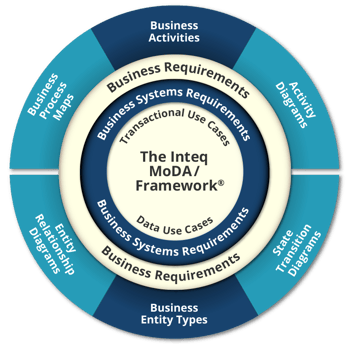
• The model driven analysis framework

The Requirements Foundation
• Actors and interactions
• The 5 types of interactions
• Defining baseline requirements

Analyzing Process Related Requirements
• Business process mapping and analysis
• Activity diagrams and the interaction flow of events
• Business process improvement concepts

Analyzing Data Related Requirements
• Characteristics of business data
• Entity types, attributes, relationships
• The entity-relationship (E/R) diagrams

Analyzing State Related Requirements
• Entity life cycle concepts
• Defining state transition rules/operations
• The state transition diagram

Specifying Requirements via Use Cases
• Business scenarios – validating & extending requirements
• Organizing, tracking, assembling, and packaging
• Factoring/normalizing requirements
• Defining test cases from functional requirements


Putting it All Together - Participants work in small groups to analyze a complex business case, identify key business rules and specify business requirements. This session provides invaluable hands-on experience to enable participants to immediately apply the techniques effectively within their own organization.

Best Practices and Practical Tips
• Managing the project scope
• Discovery techniques and engaging business end users
• Critical people, project and change management skills


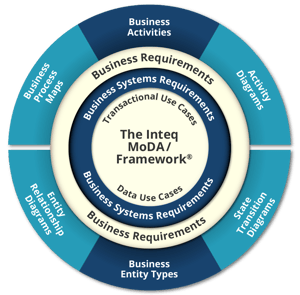
The Business Systems Requirements training program is part of Inteq’s integrated Business Analysis Series (which also includes Business Process Management, Business Intelligence Requirements, Business Data Modeling and Advanced Data Modeling) is based on Inteq’s MoDA™ Framework* – the rapidly emerging worldwide standard for business and systems analysis.

__________

*Model Driven Analysis Framework

© INTEQ GROUP INC. 2008